Lithium-ion batteries are today an indispensable part of technological development. They are used in everything from electric bicycles and electric tools for technical equipment and operational aids. But the growing prevalence also means a significant increase in incidents where batteries develop a fire or explode. Most recently, a college in Copenhagen had to be evacuated in the middle of the night when a bicycle battery exploded in a room, creating drama and smoke throughout the building. [ekstrabladet.dk]
The Emergency Management Board documents the same worrying trend in their national fire data. In 2023, a total of 131 fires were recorded in smaller lithium-ion products. This represents an increase of 24 percent in just one year, and the development is described as a trend that continues as the volume of battery-powered products grows year by year. [brs.dk]
For businesses, municipalities and utilities, this development is particularly relevant. Many organizations handle electric bicycles, machinery, assistive devices and batteries as a natural part of their operations. As a result, the need for clear guidelines for charging, storage and waste management of lithium batteries is increasing.
Three areas require special attention
1. Storage and internal logistics
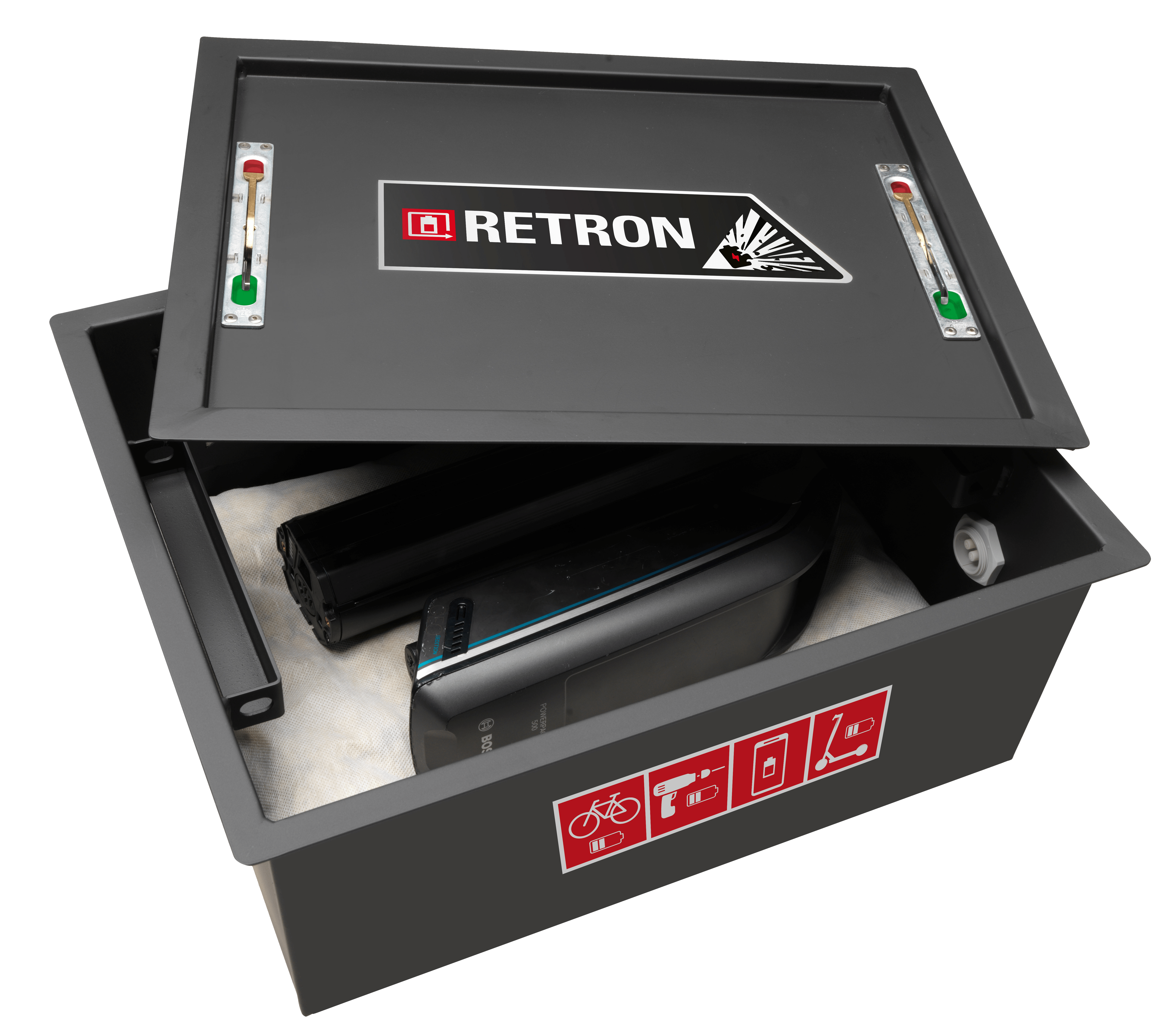
Lithium batteries must not be stored together with flammable materials and should be placed in dedicated areas where the spread of fire can be limited, preferably in a fireproof cabinet. specially suitable container.Incorrect storage is an important risk factor and one of the most common reasons why small errors develop into major incidents.
2. Charging and monitoring
A large proportion of fires in lithium batteries occur during charging. The Emergency Management Agency strongly advises that charging take place in rooms with smoke alarms and that both batteries and chargers are kept under supervision. Any increase in heat or noise should be taken seriously and charging should not be carried out near escape routes where smoke and fire could block evacuation.
3. Handling of defective or worn-out batteries
Organizations should pay special attention to batteries that have visible damage, bulges, or signs of overheating. Such batteries must be handled as hazardous waste and disposed of in specially approved solutions that can prevent the spread of fire by self-ignition.
At PWS Denmark, companies and operating organizations that seek more knowledge about the risk profile of lithium batteries and how to best ensure safety in everyday life come across. It’s not just about placing equipment correctly, but about having clear internal procedures, trained personnel, and clear responsibilities. Once the processes are in place, the risk is significantly reduced while simultaneously strengthening the safety of both employees and buildings.
Security starts with information and well-developed procedures.