

Denmark produces around 370,000 tons of plastic waste annually, of which only about 23% is recycled*. This means that a large part of the plastic still ends up in incineration or landfills, which is a challenge both economically and environmentally. To improve these figures, not only proper sorting from households is required, but also structured efforts in waste management in industry and construction.

By implementing clear guidelines and ensuring the right waste sorting facilities, the amount of recycled plastic can be significantly increased. This can also lead to reduced waste fees and streamline daily operations, as plastic that is recycled properly does not need to be treated as residual waste. Additionally, better sorting can ultimately lead to a reduction in the amount of waste sent to incineration, which is also an important factor in reducing CO2 emissions.
This is not only an environmental benefit, but also an economic advantage, as properly sorted waste costs less to dispose of and more resources can be recovered for new products.
This is how you handle plastic packaging and achieve proper waste sorting
Plastic waste is a particular challenge for many, and a large part of the waste ends up as residual waste. When sorting your waste, it is important to follow the local guidelines for how different types of waste should be handled in your municipality. Proper waste sorting contributes to more efficient recycling and reduces the amount of waste that ends up in landfills or incinerators. The waste sorting of plastic, soft plastic, and packaging varies from municipality to municipality, and it is important to be aware of the specific guidelines.
Soft plastic, such as bread bags, plastic film, refill packaging, packaging from fruit and vegetables, candy bags, frozen food bags, and newspaper wrapping, can be particularly difficult to handle. During collection, soft plastic can often ”expand”, making it difficult to get the waste out of the container. To facilitate the handling of soft plastic, a minimizer be a useful solution. This unit comes with a rubber band to keep the plastic bag in place, and it has hanging holes and is designed in a size that makes it easy to place it, for example in a kitchen cabinet.
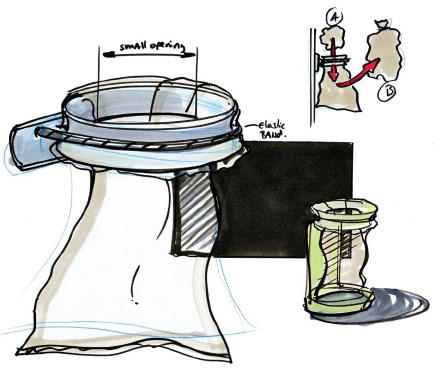
By following the local guidelines and using practical solutions like the minimizer, you can do your part to improve waste sorting and contribute to a more sustainable future.
*Source:
The plastics industry, ”Data on Plastic – Production and Recycling in Denmark” – https://plast.dk/meget-plast-egentlig-genanvendt-data-plastaffald-genanvendelse/